Hair Loss in Perimenopause is one of the most frustrating and unexpected changes many women experience in their 40s and early 50s. While hot flashes and irregular periods are widely discussed, thinning hair often feels like a silent symptom that catches women off guard.
If you’ve noticed more hair in your brush, widening parts, or decreased volume, you’re not alone. Hormonal fluctuations during perimenopause can significantly affect your hair cycle, but the good news is that effective solutions are available.
In this comprehensive guide, we’ll explore the early signs, root causes, and the most effective treatments for hair loss in perimenopause.
Table of Contents
What Is Perimenopause?
Perimenopause is the transitional phase leading up to menopause. It typically begins in a woman’s 40s (sometimes earlier) and can last several years before menopause is officially reached, defined as 12 consecutive months without a period.
During this time, estrogen and progesterone levels fluctuate unpredictably. As these hormones decline, the relative influence of androgens (male hormones present in small amounts in women) usually increases. These hormonal changes affect multiple systems in the body, including the hair growth cycle.
Understanding Hair Loss in Perimenopause
Hair grows in cycles:
- Anagen (growth phase)
- Catagen (transition phase)
- Telogen (resting/shedding phase)
As women transition through perimenopause and into menopause, estrogen and progesterone levels decline considerably. These hormones play an important role in supporting healthy hair growth because they help maintain hair in the anagen, or active growth phase, for a longer time. When their levels decrease, more hair follicles shift prematurely into the telogen (resting) phase, which results in increased shedding and visible thinning.
At the same time, androgens such as testosterone and dihydrotestosterone (DHT) may have a stronger relative influence as estrogen declines. DHT can gradually shrink hair follicles, a process known as miniaturization, causing strands to become finer, weaker, and slower to grow.
Early Signs of Hair Loss in Perimenopause
Recognizing early symptoms can help you seek treatment sooner and prevent progression.
- Increased Shedding: You may notice more hair in the shower drain, on your pillow, or while brushing.
- Widening Part: The center part of your hair may appear broader, especially under bright light.
- Reduced Volume: Your ponytail feels thinner, and your hair lacks the fullness it once had.
- Slower Growth: Hair seems to grow more slowly and struggles to reach previous lengths.
- Changes in Texture: Hair may become drier, more brittle, or lose its shine.
Unlike male-pattern baldness, women typically experience diffuse thinning across the scalp rather than complete bald patches.
Additional Causes of Hair Loss in Perimenopause
- Stress: Perimenopause is often accompanied by emotional stress, sleep disturbances, and life changes. Chronic stress increases cortisol levels, which can push hair into the shedding phase (telogen effluvium).
- Nutritional Deficiencies: Iron deficiency, low vitamin D, inadequate protein intake, and B-vitamin deficiencies can all contribute to thinning hair.
- Thyroid Disorders: Thyroid dysfunction becomes more common during midlife and can significantly impact hair growth.
- Genetics: If your mother or grandmother experienced hair thinning, you may be genetically predisposed.
- Poor Sleep Quality: Sleep disturbances are common in perimenopause due to night sweats and hormonal shifts. Inadequate sleep affects hormone regulation, increases cortisol levels, and impairs cellular repair, all of which can negatively impact hair growth.
- Rapid Weight Loss: Crash dieting or significant weight fluctuations, which sometimes occur during perimenopause, can shock the system and trigger telogen effluvium. The body prioritizes vital organs over hair growth during periods of nutritional stress.
Diagnosing Hair Loss in Perimenopause
Hair shedding of up to 50–100 hairs per day is normal. However, if you’re noticing clumps of hair, a visible scalp, or dramatic changes in density, it’s time to consult a healthcare professional or dermatologist for a proper evaluation.
A thorough assessment may include:
- A review of your medical history
- Hormone testing
- Thyroid function tests
- Iron and vitamin level assessments
- A scalp examination
Identifying the root cause is essential, as treatment strategies vary depending on whether the issue is hormonal, nutritional, inflammatory, or stress-related.
LaseMD: Effective Solution for Hair Loss in Perimenopause
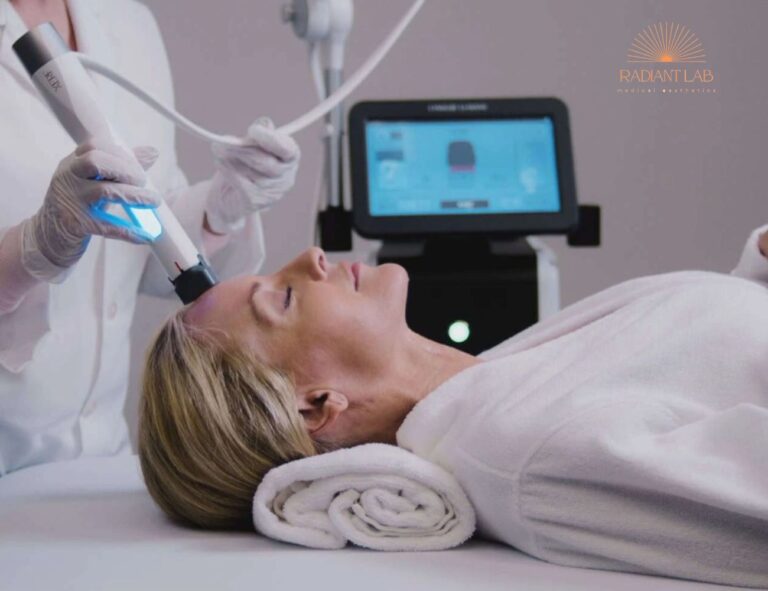
LaseMD laser hair restoration is an advanced, non-surgical treatment available at Radiant Lab, designed to help address hair loss by supporting natural hair follicle regeneration. This state-of-the-art procedure uses non-ablative fractional thulium laser energy to create tiny microchannels in the scalp, allowing active treatment serums to penetrate deeply into the skin and deliver regenerative ingredients directly to weakened or dormant hair follicles.
The treatment is comfortable, needle-free, and suitable for all skin and hair types, making it an ideal option for women experiencing hair thinning during perimenopause. LaseMD works by improving scalp circulation, stimulating follicle activity, and promoting healthier hair growth over time.
When combined with the proprietary KeraFactor serum, formulated with bio-identical growth factors, proteins, and regenerative polynucleotides derived from salmon DNA, the treatment helps revitalize damaged follicles, strengthen individual hair strands, and support all stages of the hair growth cycle.
This makes LaseMD an effective solution for slowing hair loss progression while encouraging the growth of thicker, fuller, and stronger-looking hair.
Lifestyle Strategies to Protect Your Hair
Protecting your hair during perimenopause starts with supporting your overall health.
Focus on eating a balanced, protein-rich diet with adequate iron, vitamin D, B vitamins, and healthy fats to nourish hair follicles from within. Manage stress through regular exercise, mindfulness practices, and quality sleep, as elevated cortisol levels can trigger shedding.
Be gentle with your hair by limiting heat styling, avoiding tight hairstyles, reducing chemical treatments, and using mild, sulfate-free shampoos. Regular scalp care, including gentle massage to stimulate circulation, can also support healthier growth.
Small, consistent lifestyle habits can significantly reduce the progression of hair loss and help maintain stronger, fuller-looking hair over time.
Conclusion
Hair Loss in Perimenopause is a natural but often distressing part of midlife hormonal changes. Fluctuating estrogen and progesterone levels, increased androgen sensitivity, stress, and nutritional deficiencies all play a role in thinning hair during this transition.
The good news is that early recognition and personalized treatment can help slow progression, restore density, and improve overall hair health. From advanced treatments like LaseMD to lifestyle optimization and nutritional support, there are effective solutions available.
If you’re noticing changes in your hair during perimenopause, don’t ignore them. A professional evaluation can help identify underlying causes and help you regain not only fuller hair, but also your confidence.